

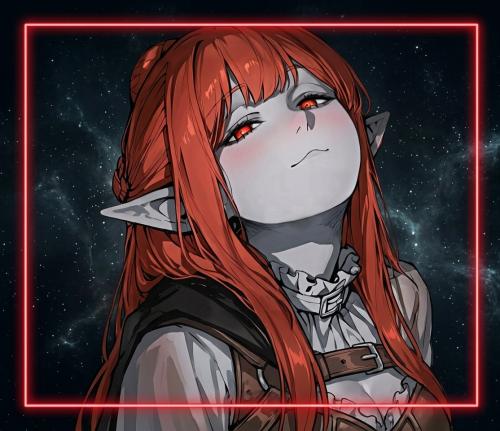

Norda — Land of Ice and Stone
Concerning the Norden Clans, the High Kingdom of Skarvheim, and the Oaths Which Outlive Kings
I. Of the Northern Country and the First Exiles
Upon the northernmost reaches of the Westcontre lie the formidable territories of Norda, where glacial mountains descend toward tempestuous seas, immense forests endure beneath the weight of winter, and the narrow passages of innumerable fjords provide such shelter as the geography will permit. The land is distinguished by extraordinary variations of elevation and climate, its inhabited valleys frequently separated by wildernesses whose passage demands considerable preparation even during the more favorable months of the year.
The Norden, whose ancestral history is inseparable from these severe conditions, preserve traditions concerning their descent from wandering clans and exiles who departed the more temperate territories of the southern Westcontre in ages now obscured by uncertainty. The precise circumstances of their migration are imperfectly remembered, though the oldest accounts frequently speak of foreign conquest, the obligations of defeated houses, and the determination of certain families to preserve their independence beyond the reach of more powerful sovereigns. In Norda these early inhabitants encountered a country whose conditions rendered many of their inherited practices inadequate. Agriculture remained limited by the severity of the climate, while the abundance of navigable coastal waters encouraged the development of fishing, hunting, and seafaring as principal means of sustenance. The construction of durable vessels became a matter of survival, and the forests which endured upon the lower slopes furnished materials whose possession could prove as consequential as that of fertile land elsewhere.
From these conditions arose a civilization whose political institutions emphasized kinship, communal obligation, and the responsibilities of those who claimed authority over others. The abandonment of one's family in a time of necessity came to be regarded as an offense of exceptional severity, while the preservation of sworn agreements became indispensable to cooperation among communities whose isolation frequently rendered external assistance uncertain.
II. Of the Clans and the Covenant of Skarvheim
For much of their early history, the Norden possessed no universal sovereignty competent to command the allegiance of every clan. Their settlements were governed by chieftains whose authority arose from ancestry, martial accomplishment, wealth, and the confidence of those families whose warriors and possessions sustained their power. Certain rulers exercised influence over extensive territories, while others possessed little authority beyond the immediate boundaries of their own valleys.
The independence of these communities afforded considerable local freedom, but it also occasioned repeated conflicts concerning grazing grounds, fisheries, inheritance, and the protection of maritime passages. The necessity of cooperation became most apparent during periods when foreign warbands attempted to establish authority over the northern approaches, or when unusually severe winters compelled neighboring clans to rely upon one another for survival. Approximately six centuries before the Investiture, the chronicles of Skarvheim record the emergence of Haldren Frost-Eyed, a chieftain whose attempts to reconcile several influential northern houses culminated in the establishment of a durable covenant of mutual defense. The circumstances of his accession have acquired considerable legendary embellishment, though the principal tradition maintains that his authority arose not through the conquest of every opposing clan, but through the acknowledgment of a common obligation which no single chieftain possessed sufficient strength to fulfill alone.
At the gathering remembered as the Covenant of the Nine Hearths, the participating clans recognized Haldren as High King, granting him supreme authority in matters of common defense and external relations while preserving the ancient privileges of their respective houses. The resulting sovereignty acquired the designation of the High Kingdom of Skarvheim, though its authority did not immediately extend across every territory inhabited by the Norden. The covenant established a fundamental distinction between ordinary kingship and the dignity of the High King. The latter could summon the constituent clans to common purpose, negotiate with foreign sovereigns, and coordinate the defense of the realm, but he could not indefinitely disregard the obligations through which their allegiance had been secured. A ruler whose conduct threatened the survival or honor of his sworn dependents might discover that the very institutions which had elevated him could also deprive him of effective authority.
III. Of the High Kings and the Wars of the Northern Shores
The centuries following the establishment of Skarvheim were marked by repeated attempts to reconcile the independence of the clans with the practical requirements of a common sovereignty. Certain High Kings preserved peace through measured diplomacy and the careful distribution of privileges, while others sought to extend their authority through military force, thereby provoking the very divisions which their office had been established to overcome.Among the most celebrated sovereigns of this period was High Queen Ragna Stormhand, whose reign is traditionally placed approximately four centuries before the Investiture. Assuming authority during a succession of disputes concerning the command of the northern fleets, Ragna established a series of maritime obligations through which the principal clans were required to contribute vessels and crews to the defense of the common approaches.
Her achievements contributed to the development of a more organized naval tradition, though her administration did not extinguish the practice of independent raiding. Norden mariners continued to pursue commerce and warfare according to circumstances, sometimes obtaining considerable wealth from distant expeditions and at other times provoking foreign reprisals whose consequences fell upon communities possessing little connection to the original offenders. Relations with the Baejki maritime powers were consequently characterized by alternating periods of profitable exchange and considerable hostility. The merchants of the Isles of Plenty furnished goods uncommon in Norda, while the northern clans supplied timber, hides, worked materials, and the services of sailors whose familiarity with difficult waters commanded considerable esteem.
The mountain kingdoms of Ossus likewise maintained longstanding commercial relations with the Norden. Weapons, tools, and durable metal fittings manufactured by Ossan and Morvanni craftsmen were exchanged for northern commodities, while the financing of foreign expeditions occasionally introduced the inhabitants of Norda to contractual obligations whose severity was imperfectly appreciated until repayment became necessary. The resulting accumulation of wealth contributed to the rise of influential maritime houses, whose ships and retainers afforded them considerable political independence. The High Kings therefore inherited a recurring difficulty: that the prosperity of their subjects might strengthen the common realm while simultaneously diminishing the sovereign's capacity to command it.
IV. Of the Gods, the Sagas, and the Ancient Covenant
The religious traditions of the Norden remain deeply associated with the natural conditions of their homeland and the obligations through which its people have survived. Among the principal divinities acknowledged by their ancestral customs are Skathi, whose dominion concerns the severity of winter; Njolfr, whose name is invoked in connection with the storms and tempests of the northern seas; and Eira, whose guardianship of the hearth represents the preservation of warmth, kinship, and refuge amid a world of considerable hardship. These divinities occupy a place of exceptional importance within the cultural inheritance of the Norden. Their names are preserved in the sagas of ancient families, the ceremonies attending important voyages, and the observances through which communities acknowledge the return of their members from journeys undertaken beyond the safety of the inhabited valleys.
In the oldest accounts, the relationship between mortals and the divine appears considerably more immediate than that familiar to the inhabitants of the present age. Certain ancestral heroes are said to have received extraordinary assistance during periods of mortal danger, while the accomplishments attributed to ancient seers and sacred craftsmen exceed the capacities ordinarily demonstrated by contemporary practitioners. The onset of the atropoi has consequently occasioned profound spiritual uncertainty. Although the ceremonies of the Norden continue to be observed, their reputed supernatural consequences have become increasingly uncommon, while the great accomplishments recorded in ancestral sagas have receded into the uncertain territory between history and legend.
Some religious custodians interpret this condition as evidence that the gods have withdrawn their favor from a people who have failed to preserve the obligations of their forebears. Others maintain that the divine remains unchanged, and that the estrangement arises from a disturbance within the mortal world itself. Still others regard the continuation of ritual as an obligation independent of any visible manifestation, asserting that reverence which depends upon reward is scarcely distinguishable from commerce.
The resulting diversity of interpretation has seldom produced a universal schism, for the Norden possess no single priestly authority competent to impose a common doctrine upon every clan. Religious traditions consequently vary between valleys and households, though the names of the ancestral gods and the sanctity of sworn obligations remain widely recognized.
V. Of the Winter of Broken Oaths
Among the most grievous episodes preserved in the later histories of Skarvheim is the period remembered as the Winter of Broken Oaths, traditionally placed approximately two and a half centuries before the Investiture. The crisis followed a succession of poor harvests, failed maritime expeditions, and disputes concerning the distribution of provisions among the constituent clans. Certain powerful houses, possessing sufficient stores to endure the winter independently, refused to furnish the assistance required by their customary obligations. Others attempted to secure their survival through the seizure of neighboring supplies, while the authority of the reigning High King proved insufficient to compel a general settlement.
The resulting disorder occasioned considerable suffering, particularly among smaller communities whose security depended upon the reliability of the common covenant. Several clans abandoned their ancestral holdings, and the recollection of those who perished entered the sagas as an enduring condemnation of rulers who had placed private advantage above the obligations of kinship.
The eventual restoration of order required more than the defeat of particular offenders. A gathering of influential chieftains reaffirmed the duties attending membership within the High Kingdom, establishing more explicit provisions concerning the maintenance of common stores, the obligation to aid allied communities, and the circumstances under which the authority of a negligent sovereign might be challenged.
These reforms did not transform Skarvheim into an absolute monarchy. Indeed, their principal effect was to preserve the independence of the clans while rendering the reciprocal obligations of their association more difficult to disregard.
The Winter of Broken Oaths consequently acquired a moral significance exceeding its immediate political consequences. Its memory furnished subsequent generations with an example of the destruction occasioned when the preservation of one's own household was pursued at the expense of the wider community upon whose cooperation that household ultimately depended.
VI. Of Norden Law, Custom, and the Ordering of Daily Life
The political institutions of Norda remain distinguished by the considerable authority exercised within the constituent clans. Chieftains preside over local disputes, assemblies consider matters affecting the common welfare, and the obligations of inheritance and kinship are preserved through customary practices whose antiquity is frequently regarded as sufficient justification for their continuation.
The High King exercises supreme authority in those matters entrusted to the common sovereignty, but the practical administration of the realm remains dependent upon the cooperation of lesser rulers. This arrangement affords considerable resilience, for the loss of an individual sovereign seldom occasions the immediate destruction of the institutions through which ordinary life is maintained. Yet it likewise renders the kingdom vulnerable to prolonged disputes whenever the independence of influential houses obstructs the pursuit of common purpose.
Within the inhabited valleys, the ordinary rhythms of life are shaped by the changing seasons. Families cultivate such land as the climate permits, maintain herds suited to the northern country, preserve stores against the approach of winter, and employ the warmer months for construction, trade, and the preparation of vessels. Craftsmanship possesses considerable dignity among the Norden, particularly where the resulting objects contribute directly to the survival and prosperity of the household. Shipwrights, smiths, weavers, hunters, and navigators are frequently held in esteem, while the preservation of ancestral techniques remains an important expression of familial identity.
The telling of sagas occupies a central place in communal life. Through these accounts, the deeds of ancestors are preserved, disputes concerning inheritance may be informed, and the conduct of the living is measured against examples of extraordinary courage, generosity, treachery, or folly. The reliability of such traditions varies considerably, but their social significance seldom depends upon perfect agreement concerning every historical detail.
VII. Of the Present Kingdom and the Shores Beyond the Westcontre
In the present age, the High Kingdom of Skarvheim remains among the foremost northern sovereignties of the Westcontre, its influence sustained by the martial traditions, maritime proficiency, and ancestral obligations of the Norden clans. Though possessing fewer opportunities for agricultural abundance than certain southern empires, its inhabitants have cultivated an extraordinary familiarity with difficult environments and the demands of long-distance seafaring.
The diminished manifestations of magick have nevertheless occasioned a growing uncertainty concerning the future of their spiritual inheritance. The deeds attributed to ancient heroes have become increasingly difficult to reconcile with the experience of the present, and the ceremonies once believed to secure extraordinary blessings now depend principally upon the conviction of those who continue to observe them.
The discovery of Sangreal has consequently inspired ambitions of considerable diversity. Certain chieftains perceive opportunities for profitable commerce, territorial influence, and the acquisition of resources unavailable within Norda. Others contemplate the establishment of new homesteads for families whose ancestral territories can no longer adequately sustain their prosperity.
Among the custodians of the older religious traditions, however, the island has awakened an expectation of altogether different character. Reports concerning its unusual conjunction of divine influences have encouraged speculation that the powers remembered in ancestral sagas may not have vanished from existence, but merely withdrawn beyond the reach of those inhabiting the diminished territories of the Westcontre.
The sovereigns of Skarvheim have therefore acknowledged the Concord of Nine Crowns, recognizing that the Investiture offers opportunities which the High Kingdom cannot prudently disregard. Yet the participation of its constituent clans remains shaped by their own ambitions, obligations, and interpretations of the sacred. No High King can guarantee that every Norden expedition will pursue identical purposes, nor that those who establish themselves upon Sangreal shall forever preserve the interests of their ancestral homeland. The same independence which has enabled Skarvheim to endure the passage of centuries may yet furnish occasions for disputes beyond the shores of the Westcontre.
Thus Norda approaches the new age as it has approached so many before it: with the determination of a people accustomed to hardship, the accumulated obligations of an ancient covenant, and the uncertain hope that the world may still preserve wonders worthy of the songs composed by their ancestors. For seven centuries the High Kings have risen and fallen, the clans have gathered and dispersed, and the northern seas have borne innumerable vessels toward distant horizons. Yet the central obligation of their civilization remains unchanged.
That no household, however mighty, endures by its strength alone.
Kings are buried beneath the mountain, but their oaths remain among the living.