| Welcome, Guest |
You have to register before you can post on our site.
|
| Online Users |
There are currently 34 online users.
» 1 Member(s) | 32 Guest(s)
Applebot, GregoryCoack
|
|
|
| The Cycle - Revival System of Sangreal |
|
Posted by: __denby - 10-22-2026, 02:30 AM - Forum: Lore Locks and RP Rules
- No Replies
|
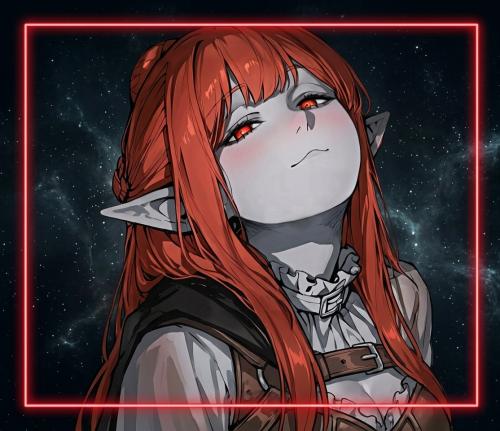 |
The Cycle - The Character Revival System of Sangreal
Life is sacred, and there is a war going on. Father and Mother have abandoned us and the Beast seeks to devour us round about all sides. She has not forgotten us though, our beloved Sister. Even now she pines for our sorrow.
The Great Beast and his hated Sister
In the time before time knew itself to be, there were two opposites whose nature is incomprehensible to the minds of mortal men. Of them beholding one another there was thought generated that targeted another for the first moment in eternity. There had not been moments prior to this, and thus for both parties - one eternal and one pre-extant but lacking awareness - a great many things erupted from minds raw and enraptured.
He, that is the Illumination, our great Father from whom all descends, had created other things before. Creation was not new to him, but this new other possessed the capacity to behold. Therefore new and alien emotions appeared within the mind of Him and it repulsed him. In an act of desperation the godhead divested this essence of Himself in great regret; that itself being another foul emotion foreign to the purity of the Illumination. All of this, being itself a thing but born of the divine like the Sangreal herself, formed into a coherent mind. It was the firstborn of the firstborn, begat of the two divinities, and knew only within itself disgust, hatred, fear, anxiety, wrath and loathed all that was not It. This was the thing that is even now known by many names, the Child, the Great Beast, or the Firstborn. In all life there is animalistic force, there is the fury and lust - it is from the Beast that they all descend.
She, that is the Sangreal, our chthonic Mother from whom all structure and form originates had not possessed mind until granted it by the Illumination. But she had possessed form, and that form was of the space between the unplumbable darkness of the Abyss and the brightness of the Illumination - and for untold aeons, He had drawn simpler creations across her form. Therefore she knew the mirror of mind as flesh, and knew not the egoic nature of the light. As her many errant forms were in that first moment revealed by the light of consciousness, the disparate nature between what now was and what could be, and had been caused in itself a new form to emerge. In that place of thingness, there was an object now known by minds. For a thing to be known by minds it must have a story of relation, but relation is itself not a thing and exists in a wholly new dimension. In this paradox sprung forth the mirror of the firstborn, the progeny of the grail, Narrative.
In her there is the preservation of all wisdom, of all truth, and of all direction. In her there is understanding, even for the depth of the very soul. In her there is the War, and in her there is Death, and in her there is Life. In her is the mystery. As we know, it was the mystery of our beloved Sister that drew the brilliance of the godhead into flesh, and it is in her mystery that we return time and again until our Will is exhausted.
Mechanics of the Revival System
Players are permitted one “free” revival per OOC month, that is, being 30 full days from death-to-death. Generally, players are expected to document their death and resurrection with a forum post or a discord message to a trusted QM. If necessary, investigations can and will be made into the specifics of a player’s death and resurrection. Lying about something like this will get you permanently de-whitelisted as it is a serious disrespect to the roleplay of the people you are playing alongside. Our world functions best with consequences, OOC-time elapsed being the least serious of them all.
The Goddess of the Narrative revives all, and that includes the evil and nefarious. As, despite their ‘evil’ nature according to some morality, she perceives the divinity of life sacred regardless of its perspective. That being said however, only the Illumined are capable of resurrection. Being an extraplanar deity of contiguous storytelling, the implementation of your revival is not important, merely the fact that you are. This can and will at times result in the forceful tearing of your consciousness from your deceased carcass and forcing it directly into the unwilling and unwitting chthonic-based NPC. An overwriting of consciousness directly translates to an overwriting of forms. Imagine if you will awakening to the terrified faces of a family seated around a dinner table; for their kindred has suddenly transformed into an adventurer they’ve never met. It is well known, even, that this process can occur for the illumined.
Repeated resurrection will degrade the ‘model’ of consciousness that each player-character possesses. This results in a degradation of willpower, but only comes into effect for each death after the first ‘free’ monthly resurrection. Dying repeatedly has consequences, more than simply to yourself. Simply put, the entirety of the world operates on the illumination of the spirit of the godhead. You, as the player-character, are the essence of this. Repeated resurrections in certain regions of the Sangreal will weaken the influence of the godhead within that area - raising the influences of the gods or goddesses innate to the land - which can have unintended consequences.
- First Death within 30 Days is ‘Free’ to Revive. Up to Two (2) 'Free' Deaths within 30 Days if the death is due to events/dungeons/raids. No physical appearance manifests.
- Your first death results in the start of your revival timer. Dying within 30 days of your first death progresses you to the Second, etc.
- Second Death in 30 Days causes one named lore asset to drop. One point is taken away from the global mana pool. No physical appearance manifests.
- Third Death in 30 days causes a drop of half of your named lore assets. Two points are taken from the global mana pool. The character appears afflicted by a flu-like illness until the end of the thirty day window.
- Fourth Death in 30 days causes drop of all of your named lore assets. Four points are taken from the global mana pool. The character appears almost deathly, pallid skin, weakened body and hollowed eyes - muscular weakness and lethargy are inherent until the end of the thirty day window.
- Fifth Death in 30 days causes permanent death of the character. Five points are taken from the global mana pool.
Each death after the first (or second event death) detracts from the global magic pool.
In order to revive your character, you must do the following;- Make a forum post for your character, contemplating death, the event of dying, their resurrection thought process, something that notes this as a permanent alteration of their experience..
- Contact a trusted QM and let them know of your death, the timestamp, and what stage your character is in at that moment.
|

|
|
| The Great Gnogin has arrived |
|
Posted by: Bratman38 - 10-21-2026, 02:39 PM - Forum: Approved Whitelist Applications
- Replies (1)
|
 |
In-Character Section:
As a reference, please ensure that all of these are two to four sentences, barring the character name, so that we may gauge your roleplaying abilities.
If you would like to link an In-Character Section from another Roleplay Server, we do accept this! For our records though, the OOC Section must be completed As-Is.
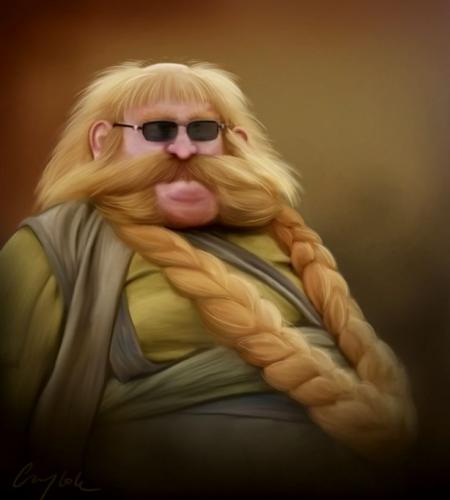
Character Name: Gnogin
Character Description: With Gnogin standing at only four feet tall and combined with his scrawny build, he was constantly looked down upon by the other goblins, But those who truly knew him knew not to make such a mistake for he had been born with the traits that most famed goblin warriors had. His skin and muscles were more akin to beasts rather than a normal goblin and used this to fight with much ferocity. So despite his small stature, Gnogin walks with a confidence that matches that of a goblin twice his size. But even so he grows tired of people assuming he is weak due to his size so he vows to one day become the biggest goblin in the known world.
Character Personality: Gnogin started out in the world with an anger that didn’t fit his size which ended up with him getting into a lot of fights. Eventually he learned to somewhat calm the fury inside him but he still ended up getting into a lot of fights. This anger will almost always come out when someone makes fun of his height and this recklessness will usually get him in trouble
Character Backstory: Out of the various goblin tribes across the world, Gnogin was born into one where strength and size determined the respect that you got. Unfortunately for Gnogin, He was born smaller and scrawnier than most other goblins which started him in last place among everyone else. Throughout the beginning of his life, he was constantly mocked, pushed around and forced to do the jobs nobody else wanted. It was only when the anger inside him finally boiled over that he realized the gift that the Abyss had given him, the strength of a true fighter.
He began challenging the larger goblins more frequently as he was determined to prove that he was just as strong as any of them. Eventually his constant fighting would prove to be his demise as one day he had enough of the chieftain and tried fighting him. Unsurprisingly, Gnogin lost the fight but not without taking the chieftain's eye in the process but he did not receive the death he was expecting. The chieftain who was tired of his constant troublemaking, would instead banish Gnogin from the tribe and to never return.
Although Gnogin was furious about being kicked from his tribe, he quickly decided that he didn’t need his tribe or any tribe anymore. He made a promise to himself that one day he would become the biggest goblin ever, so big that nobody would dare to call him a runt again. With little more than the clothes on his back, he set out into the world in search of any knowledge or item that might help complete his goal. He now wanders from place to place, getting into fights and chasing down any rumors that might bring him closer to achieving his dream.
Story Scenarios:
Below you will find some scenarios in which you should make a Roleplay Response. Please ensure that this is a minimum of two to three sentences, so that we may gauge your roleplaying abilities.
As you step off of a small, shoddy seafaring vessel- you set your gaze upon the local dockmaster. Rain is pouring down, seemingly not soon to cease. In the dockmaster’s hand lies a placard, upon which he is visibly writing names and information. As you approach him, the gruff man’s voice calls out to you- “Oi! Wha’s yer name and port o’ call, stranger?”
The small goblin would hop off the ramp leading down to the dock as he looked at the various ships and crewmen before turning towards the dockmaster.
“Gnogin will never let you know his name!”
A brief silence would come from the goblin before he finally spoke.
“Damn it. Well Gnogin's name is Gnogin and Gnogin is here to get drunk, fight some people and maybe find a nice gutter to sleep in!”
The town before you seems rather small- most of it is filled with shanty-shacks and hastily set up marketplaces. A vendor calls out to you from a rather well-appointed tent- a sign hangs above it: ‘Tolemire’s Potions and Oils.’ The owner’s voice seems sly, impish- “How about you sidle on over here, take a look at my wares? Want to have more than one round with your lady of the night? I can help you with that sonny.”
The goblin would look back and forth as if he is looking for who the man was actually speaking to before jaunting over to the merchant. He would look at the various brews and potions across the tents as he rubbed his green chin in thought.
“Gnogin is looking for potions that would make Gnogin very big! Bigger than anything around!
Suddenly, you see a few bandits make off with a poor woman’s supplies. They very obviously flee down an alleyway that you know of. A few guards are hastily running towards you, though it is obvious they do not know where the thieves have gone. One of them yells out to you- “Where did they go?”
Taking a big bite from a leg of meat, the goblin would watch as the bandits ran into the alleyway that he had been sleeping in lately. His eyes would turn towards the guards as he scratched his head with the leg of meat.
“Gnogin will tell you but Gnogin will get reward for he shall help you as well!”
The goblin would proceed to run after them without getting any type of confirmation and if he managed to come across the bandits, would begin beating on them with the previously mentioned leg of meat.
You’re moving through a small forest just as it is reaching dusk, and a low bank of fog begins to roll in. Suddenly, a strange creature begins to emerge from the twilight- though, its’ form isn’t entirely visible. It moves slowly, and its motions seem to be aggressive. What do you do?
The goblin would be resting in the crook of the tree as he enjoyed the setting sun but this would be interrupted by the entrance of the fog and this strange creature. He would jump down and enter a combat stance as he grabbed a club and a rock.
“Gnogin was wondering what to have for dinner but looks like dinner came to him!”
The goblin would let out a very high pitched laugh as he threw the rock with much strength towards the eye of the beast. If the rock struck true he would flex his legs and jump into the air as he attempted to land on top of the beast.
1. Username: Bratman38
2. Minecraft Username: Bratman38
2a. Alt Accounts?: [x]
3. Age: 26
4. How did you hear about our server?: Referral
4a. If a player referred you to our server, who are they?: Suldar
5. What’s your favorite lore piece and why?: Haven't read enough of the lore to determine a favorite just yet
6. Please define metagaming in your own words and provide an example: When a person uses out of character knowledge to influence something in roleplay
Example: Player A reads in discord that Player B will be going through a hidden path to deliver a rare item so Player A heads to the hidden path to ambush him.
7. Please define powergaming in your own words and provide an example: When a person makes all his moves and actions a success without care of anyone else.
Example: Player A is attacking Player B who is currently using a large shield to block attacks with a sword and automatically has it bypass the shield and stab them.
8. Have you read the terms of service and rules of roleplay? Do you agree with them?: Yes
9. What do you want to do in Sangreal?: Fight things
|
|
|
|
| Sephitar, the Unyielding Promise |
|
Posted by: __denby - 10-15-2026, 09:58 AM - Forum: Gods
- No Replies
|
|
Sephitar, The Unyielding Promise
Divinity of Ambition, Enlightenment, and Mortal Ascendancy
Principal Worshippers: The Morvanni, particularly adherents of the Sephitirem
Religious Adherents: Sephites
Religious Orders: Harbingers, Antipaladins, and Invokers
Common Epithets: The Unyielding Promise, The Ever-Watching, The Herald of Perfection
Among the Morvanni of the Westcontre, Sephitar occupies a position of singular religious significance, although the nature of his divinity differs considerably from that attributed to the gods of the established pantheon. To the Sephitirem, the religious order devoted to his cause, Sephitar is not merely a celestial sovereign to whom prayers are offered, but the embodiment of an ideal whose fulfillment would forever alter the mortal condition. He represents the promise of enlightenment through knowledge, the perfection of existence through unrelenting endeavor, and the ultimate liberation of mortalkind from the imperfections imposed upon it by the present divine order. His adherents consequently regard the established pantheon not as the rightful custodian of creation, but as an obstacle to the attainment of a greater existence.
The teachings of the Sephitirem are founded upon the rejection of eight fundamental blasphemies, among which are counted ignorance, thralldom, apathy, disunity, malice, and the abandonment of one's convictions. These doctrines demand that the faithful pursue knowledge rather than unquestioning obedience, reject the institution of slavery, temper hatred through reason, and subordinate destructive selfishness to the achievement of a common purpose. Although the disparate branches of the faith frequently disagree concerning the proper means of realizing these ambitions, they remain united in their opposition to the Pantheon and their conviction that progress requires both sacrifice and an unwavering willingness to challenge inherited tradition.
The Sephitirem is principally served by three distinguished orders. The Harbingers undertake the instruction of those willing to consider its teachings, holding that sincere faith must arise through understanding rather than compulsion. The Antipaladins constitute its martial defenders, charged with protecting the faithful and prosecuting their enduring spiritual struggle against the Pantheon. The Invokers, meanwhile, pursue enlightenment through the investigation of magick, alchemy, science, and other disciplines by which the limitations of mortal existence might eventually be overcome. Though their methods differ, all three orders acknowledge the necessity of advancing the common cause through individual merit and collective resolve.
Unlike the more traditional religions of the Westcontre, the Sephitirem rejects the sanctification of material objects, maintaining that relics and symbols possess no inherent holiness beyond their usefulness to the faith. Its adherents likewise regard their doctrines as capable of refinement, for knowledge must advance as the world itself changes. Yet beneath this intellectual openness persists an uncompromising conviction: that the faithful shall know no true salvation until the divine's dominion has been overcome and the mortal realm transformed into a paradise of liberty, perfection, and immortality.
Thus the Sephitirem preserve the solemn admonition which has long distinguished their faith:
"Unless we win our war, we will only find suffering in death."
|
|
|
|
| Thuldin, the First Artificer |
|
Posted by: __denby - 10-15-2026, 09:50 AM - Forum: Gods
- No Replies
|
|
Thuldin, The First Artificer
God of Stone, Craftsmanship, Labor, and the Keeping of Oaths
Principal Worshippers: The Ossan Dwarves of Ossus
Sacred Symbols: A hammer crossed upon an anvil; three stones beneath a mountain
Common Epithets: The First Artificer, Father of the Forge, Keeper of the Unbroken Word
Among the Ossan Dwarves, Thuldin is venerated as the divine patron of those labors by which the unshaped substance of the world is rendered useful through knowledge, patience, and disciplined endeavor. Tradition holds that he was the first to perceive within the mountain not merely an obstacle to mortal passage, but an inheritance awaiting the hands of a worthy craftsman. Thus the followers of Thuldin distinguish between the possession of material wealth and the virtues by which such wealth is honorably acquired, maintaining that no work of lasting merit may arise from labor performed without diligence or purpose.
The worship of Thuldin is intimately associated with the customs of the forge, the quarry, and the workshop. It is common for Ossan artisans to strike their anvils three times before commencing some undertaking of considerable importance, the blows signifying intention, labor, and completion. Oaths sworn before a newly kindled forge are likewise regarded with particular solemnity, for the breaking of one's given word is held to diminish the worth of all subsequent accomplishments. The most devout craftsmen believe that the imperfections of a finished work reveal something of the disposition of its maker, although such teachings are generally understood as moral instruction rather than evidence of supernatural judgment.
Among the Ossan is preserved the maxim: "Stone remembers the hand, and the hand is measured by its work."
|
|
|
|
| Abdar, the Undying Radiance |
|
Posted by: __denby - 10-15-2026, 09:50 AM - Forum: Gods
- No Replies
|
|
Abdar, The Undying Radiance
God of the Sun, Sacred Judgment, and Sovereign Authority
Principal Worshippers: The Abessy of the Kingdom of Aksara
Sacred Symbols: A golden solar disc encircled by twelve rays; a crowned flame
Common Epithets: The Undying Radiance, Father of Judgment, Witness of Kings
Abdar occupies a position of singular eminence within the religious traditions of Abessia, where his worship has become inseparable from the ancient institutions of sovereign authority. He is revered as the divine witness before whom the deeds of rulers and commoners alike are ultimately revealed, for no concealment is believed capable of enduring indefinitely beneath the scrutiny of his radiance. It is taught that the sun illuminates both the virtuous and the wicked, and that the distinction between them is determined not by the abundance of divine favor they profess to enjoy, but by the justice of their earthly conduct.
Within the Kingdom of Aksara, the Oracles of Abdar preserve the ceremonies through which the sacred legitimacy of the Negus is recognized. Their pronouncements hold considerable authority, although the precise relationship between the divine will and its mortal interpreters has occasioned numerous controversies throughout the kingdom's history. Temples dedicated to Abdar commonly employ pale stone, gilded ornamentation, and eastern-facing sanctuaries wherein the first light of morning is received with solemn observance. Among ordinary worshippers, the making of an oath before sunrise is considered an act of particular gravity.
The oldest teachings attributed to his priesthood declare: "Let no man seek refuge in shadow from the judgment of his own deeds."
|
|
|
|
| Eira, the Gentle Hand |
|
Posted by: __denby - 10-15-2026, 09:48 AM - Forum: Gods
- No Replies
|
|
Eira, The Gentle Hand
Goddess of Healing, Mercy, and the Preservation of Life
Principal Worshippers: Norden households, healers, midwives, and charitable orders
Sacred Symbols: A white flower within an open palm; a vessel of clear water
Common Epithets: The Gentle Hand, Keeper of the Wounded, She Who Remains
Though the peoples of Norda are frequently remembered for their martial customs and stern disposition, among their most cherished divinities is Eira, whose worship concerns the preservation of life and the relief of mortal suffering. Ancient traditions describe her as the one who remained beside the wounded when the great battles of the earliest ages had passed into silence, ministering alike to the victorious and the defeated. In this account lies the central teaching of her devotees: that mercy is not the privilege of the deserving, but an obligation owed by those who possess the means to render it.
Shrines dedicated to Eira are seldom imposing structures, being more frequently encountered within household chambers, modest sanctuaries, and establishments devoted to the care of the infirm. Clean water, white cloth, and simple flowers constitute the customary offerings of her adherents, whose religious obligations emphasize cleanliness, hospitality, and practical assistance to those afflicted by injury or sickness. The healing arts are regarded as honorable expressions of devotion, though few responsible priests would assert that prayer alone can remedy an illness beyond mortal treatment.
Her followers preserve a simple admonition: "Where strength has failed, let kindness remain."
|
|
|
|
| Njolfr, the Lord of the Unquiet Waters |
|
Posted by: __denby - 10-15-2026, 09:47 AM - Forum: Gods
- No Replies
|
|
Njolfr, Lord of the Unquiet Waters
God of the Sea, the Winds, and Safe Passage
Principal Worshippers: Norden mariners, coastal communities, and seafaring peoples
Sacred Symbols: A silver wave beneath three stars; a knotted length of cord
Common Epithets: The Tide-Father, Keeper of the Deep, Lord of the Unquiet Waters
Njolfr is counted among the most ancient objects of Norden devotion, his sovereignty extending, according to the old traditions, across those immense waters which separate the possessions of mortal kings. His character is neither wholly merciful nor deliberately cruel, for the sea is said to answer no mortal plea out of obligation. To Njolfr are attributed the winds which carry vessels homeward, the tempests which cast them upon distant shores, and the unfathomable depths wherein the memories of drowned generations are believed to repose.
Those who honor Njolfr commonly place a small offering of bread, salt, or drink upon the water before undertaking a voyage. The practice is not universally understood as a bargain with the divine, but rather as an acknowledgment that the fortunes of mortals remain subject to powers beyond their mastery. Mariners sometimes fashion cords of three knots to commemorate a vessel's departure, passage, and hoped-for return; such tokens are retained as expressions of faith rather than instruments of assured protection.
It is said among his worshippers that "No king commands the sea, and no sailor returns by his courage alone."
|
|
|
|
| Skathi, the White Huntress |
|
Posted by: __denby - 10-15-2026, 09:46 AM - Forum: Gods
- No Replies
|
|
Skathi, The White Huntress
Goddess of Winter, the Hunt, and Endurance
Principal Worshippers: The Norden of Norda
Sacred Symbols: A white antler upon a field of black; a bow beneath a winter star
Common Epithets: The White Huntress, Mother of Frost, She Who Endures
Among the Norden of the northern Westcontre, Skathi is revered as the divine embodiment of winter's merciless necessity. It is said that when the first snows descended upon the world, Skathi walked amidst them without raiment or shelter, and thereby demonstrated that the greatest virtue of mortal existence was neither strength nor cunning, but the will to endure that which could not be overcome. Her worshippers consequently regard hardship not as an injustice imposed upon the living, but as an inevitable condition through which character is revealed.
Hunters, trappers, and those who dwell beyond the comforts of settled civilization frequently offer prayers to Skathi before entering the wilderness. Her shrines are commonly fashioned from unworked stone, antlers, and evergreen boughs, and their attendants seldom demand offerings of considerable wealth. To share one's provisions with another during the depths of winter is regarded as an act particularly pleasing to the goddess, for it is taught that endurance without compassion is merely another form of cruelty.
Among her oldest adherents persists the saying: "The snow buries all things, yet beneath it the roots endure."
|
|
|
|
| On the Westcontre |
|
Posted by: __denby - 10-15-2026, 09:32 AM - Forum: Westcontre
- No Replies
|
|
THE WESTCONTRE
Concerning the Nine Great Powers, the Atropoi of Magick, and the Investiture of Sangreal
I. Of the Old World and the Atropoi
Upon the ancient continent of the Westcontre stand the remnants of civilizations whose histories extend beyond the certain reckoning of mortal scholarship. It is a land of innumerable sovereignties, of empires whose foundations were laid upon the bones of forgotten kingdoms, and of peoples whose traditions have endured the passing of ages beyond the comprehension of their youngest descendants. From the glacial reaches of Norda to the fertile riverlands of Levane, from the venerable highlands of Abessia to the subterranean dominions of Ossus, the inhabitants of the Westcontre have, for many millennia, labored toward the mastery of their earthly condition. In their endeavors they have raised great cities, subdued wildernesses, cultivated philosophies, and fashioned institutions of remarkable endurance; yet their greatest inheritance, that which once distinguished the earliest ages of their civilization from the diminished world of the present, has gradually escaped their possession.
It is held among certain scholars of antiquity that the magicks of the world were not always so reluctant to answer the entreaties of mortals. In epochs now obscured by the imperfection of historical remembrance, the boundary between the material and the divine is believed to have been more readily traversed, and the extraordinary manifestations of celestial influence more frequently witnessed. What is now approached with reverence, skepticism, or terror was once, according to such accounts, an accepted instrument of sovereigns, mystics, and learned practitioners. Yet the very abundance of this inheritance became the instrument of its dissipation, for the kingdoms of the Westcontre, having discovered the means by which such forces might be entreated or directed, pursued their employment with an appetite exceeding the wisdom necessary for their preservation.
The consequence of this innumerable accumulation of mortal endeavors was neither immediate nor universally understood. Over the course of millennia, the workings of magick became less certain, ancient rites diminished in efficacy, and the greatest accomplishments of the preceding ages receded first into the custody of scholars and thereafter into the uncertain province of legend. Many remedies were proposed, and innumerable explanations advanced, yet the nature of the affliction remained beyond mortal consensus. Some attributed the diminution to the expenditure of a finite inheritance, exhausted by the ceaseless demands of civilization; others conceived of the magicks as an inexhaustible force whose manifestation had become obstructed by the growing imperfection of the world. Whatever the truth of these suppositions, there could be little disagreement that the Westcontre had undergone a profound alteration, and that its peoples now inhabited a world considerably less generous in its supernatural endowments than that which their ancestors had known.
More disquieting still was the gradual disturbance of that primordial equilibrium which the learned associate with the Masculine and Feminine Divines. Though inseparable in the greater constitution of existence, their influences had ceased to manifest throughout the Westcontre with the harmony once attributed to them. The ordering and tempering influence of the Masculine Divine appeared increasingly diminished, while those darker emanations of the Feminine Divine, formerly restrained within the greater balance, acquired a predominance both subtle and pervasive. It would be a grave misunderstanding to conceive of this transformation as the simple triumph of one divine principle over another, for neither can properly be understood in isolation from its counterpart. Rather, the world had become unequal unto itself, and its inhabitants increasingly subject to the consequences of an imbalance whose origins they could scarcely comprehend.
Thus commenced that prolonged diminution which subsequent philosophers have termed the Atropoi, an age not distinguished by the abrupt ruin of civilization, but by the gradual estrangement of mortal existence from those higher influences upon which its earliest wonders had depended. In the absence of dependable magick, the Great Powers directed their considerable ingenuity toward institutions less susceptible to supernatural uncertainty. Armies supplanted enchanted guardians, engineers accomplished what magicians no longer could, and the authority of crowns, councils, and sacerdotal orders became indispensable to the maintenance of the earthly realm. In this manner the Westcontre continued to prosper, even as the greater mysteries of its existence grew ever more remote.
II. Concerning the Nine Great Powers
Among the countless principalities, territories, and lesser sovereignties of the Westcontre, nine powers have attained such eminence in the affairs of the continent that their rivalries and concords have come to determine the fortunes of nations far beyond their immediate dominions. Although differing greatly in their customs, constitution, and understanding of the divine, these realms have endured the atropoi with sufficient strength to preserve their independence and exert influence upon the greater affairs of the known world.
I. The High Kingdom of Skarvheim
Of the Norden and the Sovereignty of the Northern Clans
In the northern reaches of the Westcontre, where glacial mountains descend toward tempestuous fjords and the forests of Norda endure beneath winters of extraordinary severity, there arose the ancient sovereignty of Skarvheim. Its inhabitants, the Norden, are a people whose traditions of warfare, seafaring, and ancestral obligation have long informed their understanding of lawful government. Unlike those nations whose crowns derive their authority through uninterrupted lines of hereditary succession, the High Kingdom exists through the covenant of its constituent clans, each possessing customs, privileges, and obligations of considerable antiquity. The High King, though vested with supreme authority in matters concerning the common defense and the external relations of the realm, cannot long endure without the allegiance of those lesser chieftains whose warriors and possessions constitute the substance of his dominion. Consequently, the monarchy of Skarvheim has remained at once formidable and precarious, its strength resting upon the very independence of those sworn to its service.
The Norden preserve among their oldest traditions a profound reverence for Skathi, Njolfr, and Eira, whose names remain inseparable from the religious and cultural inheritance of their people. In the songs of their ancestors are preserved recollections of blessings and manifestations whose extraordinary character finds little correspondence in the experience of the present age. Whether these accounts are the embellishments of generations removed from their origins, or imperfect testimonies to powers now withdrawn from the world, is a matter upon which even the wisest of their chroniclers remain divided. The atropoi is understood by many Norden not as a philosophical abstraction, but as a severance from the spiritual inheritance of their forebears, and the discovery of Sangreal has consequently awakened ambitions extending far beyond the pursuit of profitable commerce. To the sovereigns and mariners of Skarvheim, the distant island promises a renewal of fortunes, yet to certain guardians of the ancient traditions it represents something considerably greater: the possibility that the world has not altogether forgotten the powers once known to their people.
II. The Qazirian Empire
Of the House of Qazir and the Dominion of the Levani
Across the expansive territories of Levane, where arid landscapes surrender their barrenness to the fertile banks of the River Huran, stands the Qazirian Empire, whose very designation bears witness to the enduring supremacy of its ruling dynasty. The House of Qazir, having consolidated beneath its hereditary authority the principal dominions of the Levani, established a sovereignty whose continuity has outlived innumerable lesser dynasties and whose institutions now govern a civilization distinguished by its commercial wealth, administrative sophistication, and cultivated learning. The imperial capital of Qarat-Zahir, sustained by the agricultural abundance of the Huran and enriched by the commerce of distant provinces, has long served as a principal repository of secular and sacred knowledge. Within its libraries, observatories, and scholastic institutions are preserved records whose antiquity exceeds that of many neighboring crowns, and through whose examination the learned have sought to recover some understanding of the extraordinary conditions said to have prevailed before the atropoi.
The sovereignty of the Qazirs is not maintained by hereditary dignity alone, for the ruling house has bound its fortunes to an elaborate system of provincial administration, commercial patronage, and religious legitimacy. Its monarchs proclaim themselves custodians of an order without which the wealth and learning of Levane would be surrendered to the rivalries of ambitious governors and competing interests. Yet beneath this appearance of imperial permanence lies an anxiety which no accumulation of material splendor has altogether dispelled. The scholarly traditions of Qarat-Zahir retain sufficient testimony concerning the diminishing efficacy of ancient magicks to regard the atropoi as a matter of serious consequence, and successive sovereigns have devoted considerable resources to the recovery of knowledge believed lost to the passage of time. It is therefore unsurprising that the imperial court should regard Sangreal with extraordinary interest, for there exists in its unusual divine constitution the prospect of discoveries whose possession might sustain the preeminence of the House of Qazir for generations yet unborn.
III. The Kingdom of Aksara
Of the Abessy, the Oracles of Abdar, and the Sanctity of Kingship
Among the venerable highlands of Abessia stands the Kingdom of Aksara, a sovereignty whose institutions preserve an inseparable union between the authority of the monarch and the religious obligations of the realm. Its ancient heartland lies among elevated plateaus, fertile valleys, and sacred precincts associated with the city of Azura, where generations of Abessy sovereigns have sought the sanction of the Oracles of Abdar. The monarch of Aksara, bearing the ancestral dignity of Negus, possesses supreme earthly authority over the kingdom, yet the legitimacy of that authority is understood to proceed from a sacred obligation transcending the mere accidents of inheritance or conquest. The Oracles, who preserve the rituals and interpretive traditions of Abdar's worship, have consequently exercised an influence upon royal succession, jurisprudence, and public ceremony unequalled by the priesthoods of many neighboring states. Thus the kingdom has endured through the conjunction of sacerdotal authority and temporal government, each affirming the necessity of the other while remaining perpetually conscious of the privileges surrendered in their mutual accommodation.
Of all the Great Powers, Aksara has perhaps perceived the atropoi with the greatest theological apprehension, for the gradual withdrawal of extraordinary manifestations appears to challenge those principles upon which the sanctity of its institutions has long depended. Within the great religious establishments of Azura, scholars and priests have advanced numerous explanations for the altered condition of the world. Some maintain that the diminution of magick signifies a trial imposed upon mortal faith, while others regard it as the consequence of transgressions accumulated over innumerable generations. More troubling are those who suggest that the divine has not withdrawn in judgment, but that mortal civilization itself has become incapable of receiving the greater fullness of its influence. Such controversies are seldom permitted to disturb the outward dignity of the kingdom, yet their implications are understood by those entrusted with its government. To the Negus and the Oracles alike, Sangreal presents an opportunity of extraordinary consequence, for the restoration of divine equilibrium might furnish the Abessy with revelations sufficient either to vindicate their most ancient doctrines or to compel their profound reconsideration.
IV. The Baejki Empire
Of the Eastern Sovereignty and the Dominion of the Serene River
The Baejki Empire occupies a place of considerable eminence among the maritime and mercantile powers of the Westcontre, its prosperity arising from the cultivated riverlands and populous coasts of Baejk. At Gyon'do, the imperial capital situated near the mouth of the Serene River, the authority of the reigning dynasty extends through an elaborate arrangement of provincial offices, hereditary dignities, and commercial obligations. Its sovereigns have long regarded the maintenance of earthly harmony as the principal obligation of government, understanding the prosperity of the empire to depend upon the orderly correspondence of its institutions with the seasons, the agricultural cycle, and the customary practices of its people. From this conception has arisen a civilization distinguished by the refinement of its craftsmanship, the sophistication of its maritime enterprises, and the extraordinary care with which its learned traditions have been preserved.
The religions and philosophies of the Baejki have historically acknowledged the intimate relationship between the mortal condition and the innumerable influences believed to inhabit the natural world. Accordingly, the atropoi has not universally been interpreted as an abandonment by the divine, but as a disturbance in the correspondence between earthly existence and those higher principles whose manifestations were once thought more readily discernible. Ancient ceremonies persist within imperial society, although their efficacy is frequently understood in symbolic or devotional terms rather than as an assured means of producing supernatural consequence. In the matter of Sangreal, the imperial court has adopted a policy characterized by outward prudence and considerable material ambition. Its merchants perceive the possibility of new maritime routes and advantageous concessions, while its scholars seek evidence by which the spiritual decline of the Westcontre might be better understood. Thus the empire enters the Investiture not merely as an acquisitive power, but as a civilization seeking to reconcile its inherited philosophy of harmony with a world whose divine constitution has become increasingly disordered.
V. The Crown of Solyndar
Of the Ilunari and the Custodianship of the Celestial Order
Upon the pale coastal cliffs of the Westcontre, where the heavens have for ages furnished the measure of religious contemplation and philosophical inquiry, the Solar Elves maintain the ancient sovereignty of Solyndar. Among the Ilunari, whose civilization is distinguished by traditions of celestial observation and the preservation of esoteric learning, the exercise of monarchy has never been regarded as a dignity independent of the higher order from which lawful authority is believed to proceed. The Crown of Solyndar is therefore invested with considerable ceremonial sanctity, yet the sovereign remains subject to the interpretations and injunctions of the Council of Oracles, whose custodianship of sacred knowledge confers upon them an influence seldom possessed by the advisers of ordinary monarchs. Through this arrangement, Solyndar has preserved a measure of political continuity remarkable even among the long-lived elven peoples, its rulers deriving legitimacy not merely from descent or martial accomplishment, but from their professed fidelity to the celestial principles governing the proper disposition of mortal affairs.
The atropoi has occasioned among the Ilunari a dispute of such magnitude that it has gradually entered the foundations of their political and religious thought. The Refulgent, interpreting the diminution of magick as evidence of a world fallen from its proper condition, maintain that the restoration of divine order constitutes an obligation which enlightened civilization must not refuse. The Celest, by contrast, regard the presumption of mortals who would compel the return of celestial favor as among the very errors by which the ancient equilibrium may first have been disturbed. Neither school possesses sufficient knowledge to settle the controversy, and the disappearance of so many extraordinary manifestations has rendered the testimony of the earliest ages increasingly difficult to interpret. The discovery of Sangreal has consequently sharpened these divisions, for the island appears to preserve an unusual conjunction of divine influences whose existence challenges the prevailing assumptions of the Westcontre. Whether Solyndar shall pursue the preservation of this conjunction or its deliberate employment remains a question upon which the future disposition of its sovereignty may ultimately depend.
VI. The Druidic Dominion of Yrdn
Of the Forest Elves and the Sovereignty of the Archdruid
Within the immense and venerable woodlands of the continental interior exists the Druidic Dominion of Yrdn, a sovereignty whose principles of government differ fundamentally from those of the hereditary monarchies and imperial dynasties beyond its forests. The Yrdn acknowledge no earthly crown superior to the sacred authority of the Archdruid, whose office embodies the supreme guardianship of the woodland realm and whose decrees possess the force of unquestionable law. The Archdruid is not merely the foremost priest of an established religion, nor a ceremonial representative of an otherwise independent political order, but the singular sovereign of a civilization in which the distinction between sacred obligation and temporal governance has been rendered almost entirely meaningless. Beneath this authority exist lesser druids, custodians, and officers entrusted with the administration of particular territories, the settlement of disputes, and the enforcement of those ordinances by which the forests and their inhabitants are governed. Yet none possesses the lawful power to overturn the judgments of the supreme office, for the Archdruid's interpretation of the natural order is recognized as the final authority within the dominion.
Such an arrangement has conferred upon Yrdn a remarkable continuity of purpose, although it has likewise rendered the realm peculiarly susceptible to the convictions and temperament of the individual entrusted with its supreme authority. An Archdruid of moderation may preserve a long peace between the woodland peoples and their neighbors, while one persuaded of the necessity of extraordinary intervention may direct the entire dominion toward policies of isolation, restriction, or hostility. In the philosophy of the Yrdn, civilization is not justified by the abundance of its possessions or the magnitude of its dominion, but by the degree to which its existence remains consonant with the greater order of nature. Consequently, the atropoi is understood by many of their learned elders as the inevitable consequence of a civilization which has mistaken the possession of power for the wisdom necessary to exercise it. The growing predominance of the darker Feminine influence has only strengthened these apprehensions, for the disturbance of divine equilibrium is perceived as a wound inflicted upon the natural constitution of the world itself. Though the Dominion has consented to representation among the Great Powers, its participation in the affairs of Sangreal is attended by profound suspicion, and the Archdruid's tolerance of colonial enterprise ought never to be mistaken for unqualified approval of its ambitions.
VII. The Onyx Kingdom
Of the Morvanni and the Dominion Beneath the Mountains
Beneath the mountainous territories of the Westcontre, beyond the familiar reach of those peoples whose dominions are measured by rivers and roads beneath the open heavens, extend the ancient subterranean possessions of the Morvanni. Within these immense caverns and fortified passages the Deep Elves have established a civilization of extraordinary industrial ambition, whose prosperity rests upon the exploitation of mineral wealth, the cultivation of specialized craftsmanship, and the maintenance of commercial relations with the nations of the surface. Their principal sovereignty, the Onyx Kingdom, acknowledges the authority of the Forgecaller, a dignity whose temporal power is sustained through the allegiance of influential houses, martial institutions, and chartered commercial interests. Although the forms of monarchy are preserved, the realities of government frequently demand accommodation between the sovereign and those powerful enterprises upon whose labor, resources, and influence the kingdom has become dependent. Thus the Morvanni have developed an order in which political authority and material enterprise are so intimately joined that the prosperity of one can scarcely be distinguished from the ambitions of the other.
The diminished condition of magick has long occupied a peculiar place within Morvanni philosophy, for the Deep Elves have demonstrated a remarkable willingness to employ material knowledge where their contemporaries continue to lament the disappearance of supernatural accomplishments. Their greatest engineers and artificers have, through generations of disciplined labor, developed methods by which the obstacles of the subterranean world may be overcome without recourse to those uncertain powers once employed by their ancestors. Yet this practical disposition has not rendered the Morvanni indifferent to the greater mysteries of existence, and the discovery of Sangreal has awakened interests extending considerably beyond the conventional pursuit of mineral wealth. Among the chartered corporations of the Onyx Kingdom, the island is regarded as a territory of exceptional commercial and strategic promise, whose resources may furnish the means of achieving advantages denied to the industries of the depleted Westcontre. The establishment of colonial authority at Rhwystro Culfor, in the northwestern peninsula of Braich Crwban, already demonstrates the considerable influence exercised by Morvanni interests within the Investiture, and the willingness of their corporations to pursue their ambitions through arrangements transcending the boundaries of their own sovereignty.
VIII. The Deep Kingdom of Kragsthal
Of the Ossan and the Sovereignty of Coin and Stone
In the ancient territories of Ossus, where mountainous country rises above the course of the River Caelwe and the foundations of civilization descend far beneath the visible earth, stand the ancestral dominions of the Ossan Dwarves. Among these, Kragsthal has attained a distinction so considerable that its name has become inseparable from the greater authority of the Dwarven realm. The Deep Kingdom is governed through the institutions of the Council of Coin, whose members exercise substantial authority over questions of commerce, taxation, inheritance, and the preservation of those ancient privileges upon which the prosperity of the Ossan depends. The crown, where invested in a sovereign, derives its practical authority through recognition by this institution, and the resulting arrangement has produced a political order wherein the legitimacy of government is measured as much by the fulfillment of contractual and ancestral obligations as by the dignity of sovereign descent. To the Ossan, wealth is not merely an instrument of luxury, but the material expression of labor preserved across generations; accordingly, the obligations attending its possession are regarded with a gravity seldom encountered among peoples less intimately acquainted with the endurance of stone.
The atropoi has nevertheless deprived the Ossan of accomplishments once believed inseparable from their ancestral mastery of the material world. Their oldest records speak of techniques and extraordinary works whose principles can no longer be reliably reproduced, and the deterioration of this inheritance has become a subject of considerable scholarly and religious concern. The veneration of Thuldin remains central to many traditions of craftsmanship, yet the distinction between sacred knowledge and practical skill has grown increasingly difficult to maintain in an age when the former so seldom manifests with certainty. In Sangreal, the Council of Coin perceives an opportunity for the recovery of exceptional materials and forgotten knowledge, although its representatives remain wary of the commercial ambitions of the Morvanni, whose competing claims frequently concern the same subterranean resources and markets. Thus the Ossan participate in the Investiture with an ambition tempered by caution, seeking the enrichment of their ancient kingdom without surrendering its prosperity to the influence of rival powers.
IX. The Kingdom of Hearthmere
Of the Halflings and the Inheritance of the Hearth
Among the fertile territories historically associated with the Abessian homelands, the Halflings have preserved a civilization whose political institutions arose not from the ambitions of conquering dynasties, but from the gradual association of agrarian communities united by common customs and obligations. The Kingdom of Hearthmere, the greatest of their independent sovereignties, is distinguished by a tradition of matriarchal government in which the authority of the crown rests upon the recognition of established lineages and the continued confidence of local communities. Its institutions, though less ostentatious than those of neighboring empires, possess a resilience cultivated through generations of communal administration, agricultural enterprise, and the careful preservation of inherited privileges. The Halflings have seldom aspired to dominion over distant peoples, regarding the security of their homes, the continuity of their kinship obligations, and the prosperity of cultivated lands as more enduring achievements than the uncertain acquisitions of foreign conquest.
The consequences of the atropoi have been felt within Hearthmere less through the disappearance of great magical institutions than through the gradual alteration of those lesser customs in which the sacred and domestic were once understood to meet. Ancient blessings of hearth and harvest survive among its people, although their efficacy has become increasingly uncertain, and the extraordinary occurrences described in the oldest family records are seldom encountered beyond the traditions which preserve their memory. The kingdom has nevertheless continued to flourish through ordinary industry, its agricultural wealth and diplomatic prudence securing a measure of independence disproportionate to its territorial magnitude. The discovery of Sangreal has occasioned considerable debate among the Halflings, for while some perceive in the distant island the prospect of new homesteads and prosperity for future generations, others apprehend that the same ambitions which have disturbed the greater continent may eventually imperil whatever refuge its extraordinary condition affords. Hearthmere thus enters the Investiture with neither the confidence of the conqueror nor the indifference of the isolationist, but with the cautious hope that its people might obtain a place within the new world without contributing to the destruction of that which makes it desirable.
III. Of the Concord of Nine Crowns
It would be erroneous to conclude that the common affliction of the atropoi produced among the Great Powers any corresponding harmony of political purpose. The kingdoms and empires of the Westcontre had, through innumerable generations, accumulated rivalries which neither the uncertainty of their spiritual condition nor the declining abundance of magick could readily extinguish. Territorial disputes, religious controversies, commercial competition, and the ambitions of sovereign houses continued to disturb the relations of nations whose philosophers increasingly acknowledged the common character of their predicament. Indeed, the very diminution of supernatural power served in certain respects to intensify these contests, for the possession of rare materials, ancient manuscripts, and sites of alleged spiritual significance became matters of extraordinary political consequence.
It was therefore not through some sudden awakening of universal benevolence that the Great Powers came to entertain the possibility of common endeavor, but through the discovery of an object whose importance appeared sufficient to reconcile, however imperfectly, their competing interests. Reports concerning the distant island of Sangreal described a territory in which the Masculine and Feminine divine influences remained united in a conjunction of unusual potency, and whose natural constitution manifested peculiarities increasingly alien to the exhausted lands of the Westcontre. Though the accuracy of these accounts was initially disputed, their implications were of such magnitude that the sovereigns of the continent could scarcely afford to disregard them. For the learned, Sangreal offered the prospect of understanding those primordial conditions whose disappearance had occupied generations of inquiry; for the devout, the possibility of renewed communion with the divine; and for the ambitious, a source of influence and wealth whose possession might alter the balance of earthly power.
From these deliberations emerged the agreement subsequently styled the Concord of Nine Crowns, an appellation whose ceremonial unity obscures the considerable differences in the political constitutions of its signatories. By its provisions, the Great Powers recognized a common interest in the exploration and settlement of Sangreal, agreeing to certain principles governing the extension of their authority and the conduct of their representatives beyond the shores of the Westcontre. The Concord did not extinguish their separate sovereignties, nor establish an imperial authority competent to command their universal obedience. Rather, it furnished the legal and diplomatic foundation upon which a collective colonial undertaking might proceed without immediately surrendering its direction to the ambitions of any single crown. Its provisions have consequently been interpreted according to the interests of those invoking them, and the privileges extended to chartered corporations, colonial governors, religious delegations, and private settlers have introduced complexities which the framers of the agreement could scarcely have anticipated in their entirety.
This undertaking became known as the Investiture of Sangreal, a designation intended to express both the solemnity of its establishment and the extraordinary significance attributed to the territory toward which it was directed. Yet the unity proclaimed in the courts of the Westcontre has seldom been perfectly reflected in the conduct of their agents abroad. The establishment of colonial authority within Braich Crwban, where the fortified city of Rhwystro Culfor has become an instrument of the ambitions of Morvanni commercial interests and their multinational associates, already furnishes evidence of the uncertain relationship between sovereign jurisdiction and chartered enterprise. Elsewhere, religious obligations, rival commercial concessions, and competing interpretations of the Concord promise to produce disputes whose resolution may depend less upon the solemn language of its articles than upon the influence of those capable of enforcing their claims.
IV. Concerning the Fate of the Westcontre
There remains, beneath the grandeur of the Investiture and the considerable expectations of its participants, a contradiction whose significance has not escaped the attention of the most discerning observers. The Great Powers of the Westcontre, whose civilizations have through millennia of accumulated endeavor contributed to the diminution of the very forces upon which their earliest greatness was founded, now direct their ambitions toward a distant land distinguished principally by the survival of that which their own territories have lost. They profess a desire for renewal, yet frequently conceive of its attainment through the same habits of acquisition, dominion, and exploitation which attended their former prosperity. Whether these ambitions may be reconciled with the preservation of Sangreal's peculiar divine constitution remains a question upon which no sovereign, priest, or philosopher can yet pronounce with certainty.
Nor is it established that the affliction of the Westcontre can be remedied through the mere possession of some unexhausted territory. For if the atropoi proceeds from the expenditure of an ancient and finite inheritance, the extraordinary abundance of Sangreal may furnish only a temporary reprieve from an inevitable diminution. If, however, the greater affliction consists in the corruption of divine equilibrium, then the restoration of magick must depend upon principles which no accumulation of material wealth or territorial authority can alone command. In either consideration lies a warning whose severity becomes apparent only when the ambitions of the Investiture are examined against the full measure of the preceding ages.
Thus the Westcontre stands at the threshold of an undertaking whose ultimate consequences extend beyond the fortunes of its kingdoms. Its peoples have accomplished much through their ingenuity, perseverance, and extraordinary capacity for the ordering of mortal affairs; yet their ancient greatness has left them with an inheritance of spiritual uncertainty which no earthly sovereignty has succeeded in dispelling. In Sangreal they behold the promise of a world not yet surrendered to the full consequences of their own decline, and in that promise discover renewed justification for their most ancient ambitions.
Whether the Investiture shall occasion the restoration of that which has been lost, or merely extend the atropoi to shores hitherto spared its greatest consequences, belongs to a future beyond the wisdom of the present age.
For it is the peculiar tragedy of mortal ambition that men should so often mistake the possession of a thing for the understanding of its worth, and in seeking to preserve the splendor of their inheritance, become themselves the authors of its ruin.
|
|
|
|
|
|
| Latest Threads |
Kaelen Vorn's Special Cha...
Last Post: __denby
11-07-2026, 10:58 AM
|
Oliver Spring's Special C...
Last Post: __denby
11-07-2026, 10:55 AM
|
Lore Changelog November 6...
Last Post: __denby
11-06-2026, 04:46 PM
|
Serpraint Mor
Last Post: __denby
11-06-2026, 04:41 PM
|
Ogofyr
Last Post: __denby
11-06-2026, 04:39 PM
|
Draig Goch
Last Post: __denby
11-06-2026, 04:38 PM
|
Mynyddog
Last Post: __denby
11-06-2026, 04:36 PM
|
Gwr Rhew
Last Post: __denby
11-06-2026, 04:33 PM
|
Twr Uchel
Last Post: __denby
11-06-2026, 02:27 PM
|
Brollachan
Last Post: __denby
11-06-2026, 02:21 PM
|
|



